


The challenge
Cancer Council Australia (CCA) is the nation's leading cancer charity, addressing every facet of the disease through research, advocacy, prevention and support. Facing limitations in content management, CCA engaged Luminary to migrate to Optimizely SaaS, creating a scalable, high-performance platform designed to support users during their most vulnerable moments.
As the foremost authority on cancer in Australia, the Cancer Council Australia website must serve as the ultimate 'source of truth' for people affected by cancer, health professionals, advocates, researchers, policymakers, and the media. The previous system presented significant friction for content authors, making it difficult to manage the high volume of evidence-based information required to maintain clinical accuracy.
Beyond technical constraints, the project needed to address a complex emotional landscape. Users often visit the site in states of distress or urgency – searching for information late at night on all devices. The challenge was to provide a digital experience that felt medically authoritative and grounded, yet warm and supportive. Additionally, with the rise of AI-driven search, CCA needed to ensure its critical information remained discoverable and citable across emerging generative engines.

What we did
The project involved a comprehensive overhaul of the digital experience, beginning with a detailed UX research and analysis phase.
Human-centred design
Our design philosophy balanced medical professionalism with a sense of hope and care. We recognised that users are often in a fragile state when visiting the site, so the experience was built to be deeply human-centred, prioritising clarity, reassurance and speed of access on mobile devices. By using the ShadCN design toolkit, we achieved a complete visual redesign that was both cost-effective and highly responsive, allowing for a seamless design-to-code workflow as well as being highly scalable for campaign sites and microsites.
Modern architecture and performance
On the technical front, we implemented a modern architecture using Optimizely SaaS and Incremental Static Regeneration (ISR). This allows the static site content updates to go live almost instantly without requiring a full rebuild – removing the friction previously associated with publishing small updates. The front-end architecture follows a strict three-layer component pattern – Presentational, Section Wrapper and CMS Bridge. This modular approach, applied consistently across over 80 registered components, ensures future development is faster and more maintainable.
Empowering content authors
The move to Optimizely SaaS has made the authoring experience significantly more intuitive. We reworked the content model so that content and settings are easier to manage, giving each microsite its own dedicated configuration. Optimizely’s tree-based page hierarchy now mirrors the site’s URL structure, making it much easier for authors to organise and locate pages and shared blocks. This setup gives the CCA team more confidence to update pages with minimal developer input.
Intelligent search and AI readiness
To address the evolving search landscape, we integrated Algolia Neural Search. This hybrid system combines traditional keyword matching with AI-driven semantic search to better interpret user intent, which is critical in a health context where users may not know the exact medical terminology.
Furthermore, we implemented Generative Engine Optimisation (GEO) strategies. By intentionally designing the information architecture and codebase to support emerging generative AI ecosystems, we ensured that CCA’s evidence-based content can be easily interpreted and cited by Large Language Models (LLMs). This positions the website not just as a destination, but as a trusted source of truth that extends its reach across multiple AI-driven channels.
Agile delivery
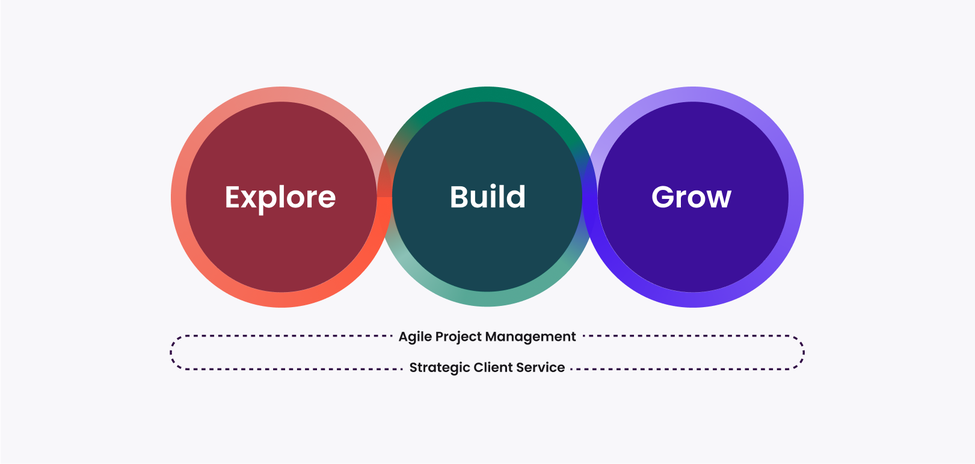
Our agile 'building backwards' approach was critical to the project's success. By starting with complex, content-heavy pages before the homepage, we allowed the CCA team to begin content entry and User Acceptance Testing (UAT) just five days into the build. This collaborative workflow ensured the migration of the main site and critical microsites remained on track and under budget.

The outcome
The new Cancer Council Australia website successfully marries deeply human-centred design with a highly scalable, future-ready foundation. By prioritising the needs of users in vulnerable moments, Luminary has delivered a platform that ensures critical information is accessible when it is needed most.
Following the migration, accessibility compliance has significantly improved across all WCAG levels, with AA and AAA compliance categories achieving increases of more than 190 percent relative to the pre-migration baseline.
The move to Optimizely SaaS has also significantly improved internal workflows. Content updates that previously caused friction are now handled seamlessly, and the modular front-end architecture has made the platform far more maintainable.
By prioritising clarity and reducing cognitive load, the new site ensures that whether a user is looking for a bowel test reminder or a general practitioner is seeking clinical releases, the information is accessible and reassuring. The result is a future-ready platform that extends the reach of CCA’s life-saving information across both traditional and AI-driven channels.

“Luminary has been a highly valued partner in the delivery of Cancer Council Australia's improved website. A standout aspect of the engagement was their deep commitment to human-centred design – grounding the digital experience in real user needs, behaviours and emotions, and respecting the vulnerable moments when people come to our site for cancer information. Together, we shaped user journeys that prioritise clarity and ease of navigation, ensuring all our audiences can quickly find trusted, relevant information when they need it most. They also brought strong expertise in Generative Engine Optimisation (GEO), helping us prioritise technical and content decisions that support the discoverability of our information, not only through traditional search, but also across emerging AI-driven experiences. The result of our collaboration is a modern, scalable platform that better connects people with the information they need, when they need it most.
Keep Reading
Want more? Here are some other examples of our work that you might be interested in.